
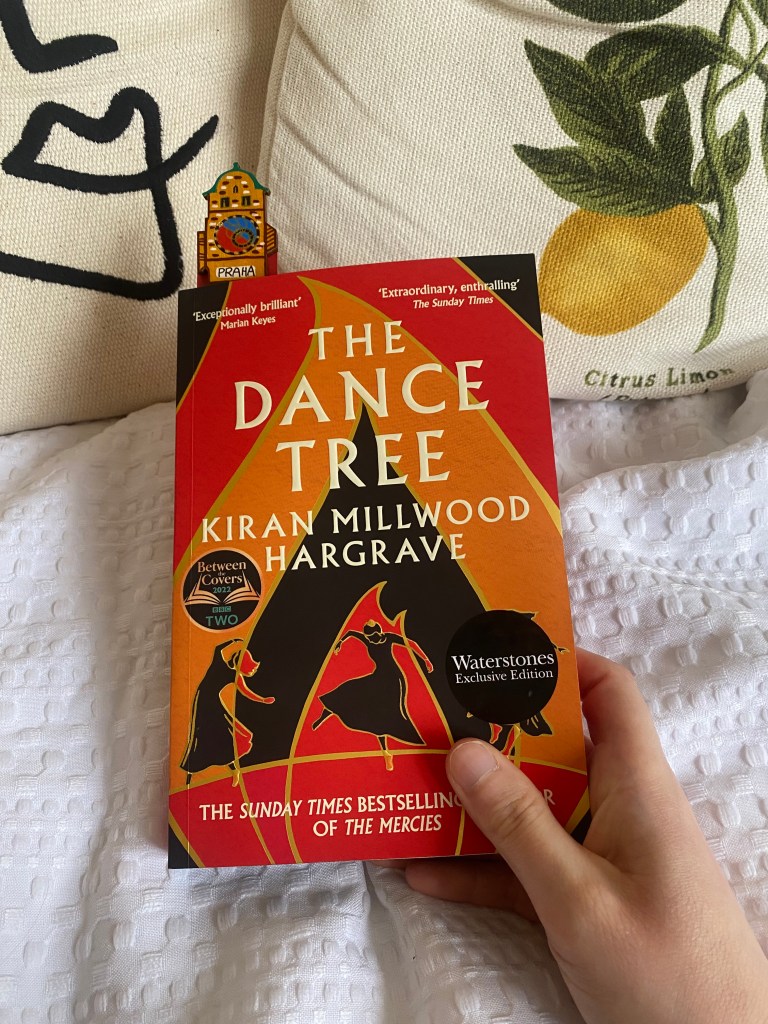
From first hearing a reading of The Dance Tree on the Between Two Books Instagram page I suspected I may fall in love with this book. As it waited patiently on my ‘to-read’ pile I could sense the magnetism drawing me in. I was enticed by the lyricism I had heard in the audio, vivid, dreamy descriptions and the foreshadowing promise of wonder. Every time I picked up this book I was totally immersed in knowing the fate of the characters. It was hard to pull away. Then on finishing the book, eyes cupped with a few gracious tears, I could only think of thanking Kiran Millwood Hargrave for her absolutely beautiful work of art.
The Dance Tree is set in 1518, the year an extensive occurrence of choreomania or a ‘dance plague’ befell Strasbourg. Amongst damage caused by a fallen comet and a famine that threatened families, a woman called Frau Troffea begins to dance. Over the next two months she is joined by hundreds, mainly women and children, who take to dancing until extreme exhaustion, sometimes resulting in their deaths. It is thought the dance plague possibly caused 15 deaths per day for reasons we can only speculate. Though different theories are still emerging on the cause of this phenomenon, at the time it was widely considered to be a religious mania, the cure ultimately involving forgiveness from St. Vitus. I first came to know of the event through Florence and the Machine’s brilliantly curated album Dance Fever, which I would also highly recommend!
Kiran Millwood Hargrave’s The Dance Tree is an exploration into the lives of women during the dance plague in Strasbourg. A heavily religious time, The Dance Tree strips back the outward appearance of women as subservient and delves into the emotions that exist despite the fear of expressing them. In this sense, the feelings in the novel are not too far removed from the present day. I appreciated Kiran Millwood Hargrave’s skilful and profound unpicking of the emotions each character faces. The depths into which her writing sings placed me firmly in the characters shoes and their presence filled me as though I was living with them. I particularly loved the main protagonist, Lisbet, whose painful experiences and inner conflicts were like an understanding palm caressing my own self-awareness. She was undoubtedly real and I will think of her courage, determination and love for a long time.
I am avoiding revealing too much of the plot within this review. The unravelling mystery is a delight I do not want to take away from readers, however I can warn you that the themes could be heart-wrenching to the right reader. Reading in the spot of sunlight I had claimed in the park, tears threatened to join the heat on my face.
If you have already read this book I would love to know what you thought! Or whether I have intrigued you enough to pick up a copy of The Dance Tree yourself.
 Hannah M. Clipston
Leave a comment